
How to Become a Product Designer: A Guide for Students in India
- 8 min read
- Portfolio Series
- We-Learn Art Classes
- February
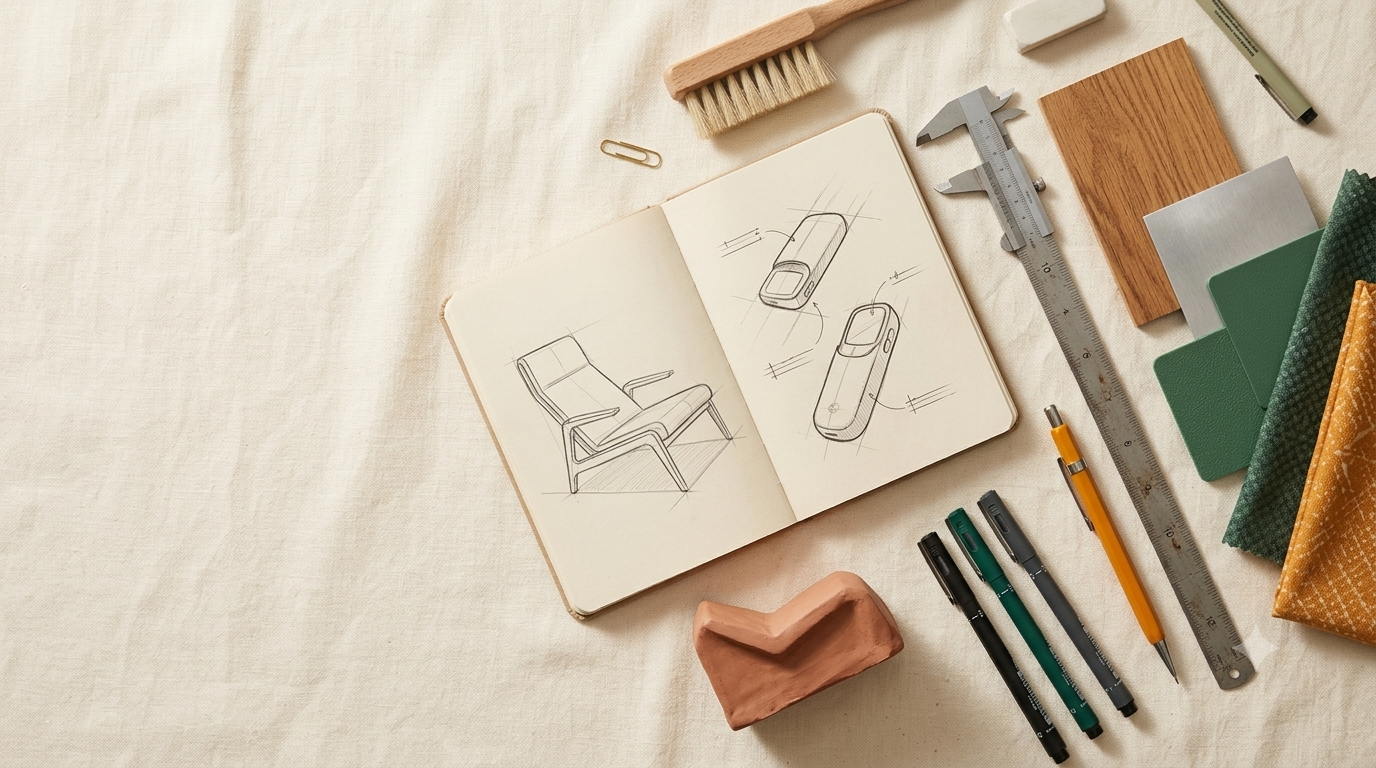
Product design is all about creating new products with visually appealing, comfortable and useful design. The aim of a product designer is to solve real life problems, by understanding the problems faced by users, exploring ideas, making concept sketches and building prototypes. The product can be of different forms i.e. physical (furniture,gadgets), digital (application, website).
What is this design major?
As a product designer, the main focus is the user, how the user feels after using a product, how the product functions, how it fits into people’s lives. The product designer keeps a few things in mind while designing a product i.e. the cost, material, technology,comfort and sustainability. So it’s a mix of creativity and logic therefore the person needs to be an artist, engineer and a problem solver at the same time.
Which are the top colleges offering this major (in India and abroad)?
In India, top institutes include National Institute of Design, IIT Bombay,IIT Guwahati, IDC School of Design, and Srishti Manipal Institute.
Abroad, popular choices are Royal College of Art, Parsons School of Design, Politecnico di Milano, Delft University of Technology and ArtCenter College of Design. These colleges focus strongly on studio work, innovation, and industry exposure.
What skills do students develop while studying this major?
The students applying to this program learn both creative and practical skills. The students learn how to make sketches, prototypes, ideations,visual communication and model making . Students also develop many software skills such as Cad, Adobe tools and UI basics. There are many other skills that students develop while undergoing this course such as problem solving , critical thinking and user empathy (Understanding what people need). Over time the students see the world in a different way i.e. questioning objects, thinking beyond aesthetics and improving experience.
What academic and technical knowledge does this major build?
There’s a lot for students to learn in this course starting from knowledge of material, manufacturing processes to ergonomics and basic engineering concepts. There are few key subjects to this course such as design research, human-centered design, Ux principles . Students learn how products are made, they learn the effect on cost and durability by using plastic modeling to metal casting.
How should a student build their profile and portfolio for admissions?
A portfolio is a visual representation of how the student thinks, it shows rough work turning into ideas, it helps collage understand the level of student’s understanding of things. The student needs to work on some small projects, redesign objects, solve social problems, photograph and create concepts. The portfolio should have originality, observation skills and passion for making things better.
What career paths and job roles are available after studying this major?
After completing this course Students can work as product designer, industrial designer, design researcher, UI/UX designer and design strategists. The students also join tech industries, design studios, startups, consumer brands. Some even work as freelance, start their own studio, become an entrepreneur. Students even join furniture design, packing and sustainable products.
How do I know if this major is right for me, including traits, mindset and natural strengths?
The students can tell if this major is for them if this thought comes to mind after watching any product- “How does it work and what was the thought process behind the idea of this?”. If the student likes to solve problems creatively and likes to think from the user’s perspective. This major also requires patience, observation and openness to feedback.
What is the subject combination for these majors?
For product design, the required subjects are maths and physics with technical understanding. What matters most is the quality of portfolio, aptitude test and interview performance. Creativity, observation and thinking skills are valued more than marks for product design. If the student likes a mix of art, logic, real world problem solving then product design is the major the student should take .
Bonus – Some interesting or fun facts about the major.
- Every object around you was once a “bad first idea.”
- Product designers often learn more from failed prototypes than successful ones.
- Sticky notes, paper clips, and Post-its are classic design success stories.
- Designers sketch hundreds of ideas for one final product.
- Good design feels invisible, bad design is noticed instantly!
- Product designers don’t just design products, they design experiences.

We-Learn
Mumbai's most trusted art classes at We-Learn, Andheri West.
Key Takeaways
- Core Identity: Product design creates things people actually use — physical (furniture, gadgets) or digital (apps, websites) — by solving real problems for real users. It sits where creativity meets engineering.
- Top Schools: In India, NID, IIT Bombay, IIT Guwahati, IDC and Srishti Manipal. Abroad, Royal College of Art, Parsons, Politecnico di Milano, TU Delft and ArtCenter. All weight studio work and portfolio over marks.
- Subjects & Entry: Maths and physics are usually required, but portfolio quality, aptitude test and interview performance matter more than academic scores.
- What You’ll Learn: Sketching, prototyping and model making, alongside CAD, Adobe tools and UX basics — plus materials, manufacturing, ergonomics and human-centred design research.
- Career Paths: Product designer, industrial designer, design researcher, UI/UX designer or design strategist — in tech companies, studios, startups and consumer brands, or freelance and founding your own studio.